Current Trends in the Monaco Rental Market
The Monaco rental market is highly competitive and among the most expensive in the world. Demand remains very strong, especially for luxury apartments. Rents have increased notably in recent years, particularly for larger apartments such as three-bedroom units. The supply is limited, which pushes prices up and keeps rental yields relatively low compared to other markets.
Investors and tenants alike focus on Monaco for its quality of life, tax advantages, and prestige, which maintains a steady interest in rentals despite the high costs.
Rental Costs in Monaco by Neighborhood and Apartment Type
The Carré d’Or area stands out with the highest rental prices, especially for larger apartments, while neighborhoods like Moneghetti and La Rousse offer more affordable rates. Prices can vary greatly depending on location, building quality, and view.
Rental Costs for Apartments, Houses and Villas by Neighborhood
Rental prices for apartments, houses, and villas in Monaco vary widely depending on the neighborhood, property size, and exclusive features.
Houses and villas are notably more expensive than apartments due to their rarity and luxurious amenities.
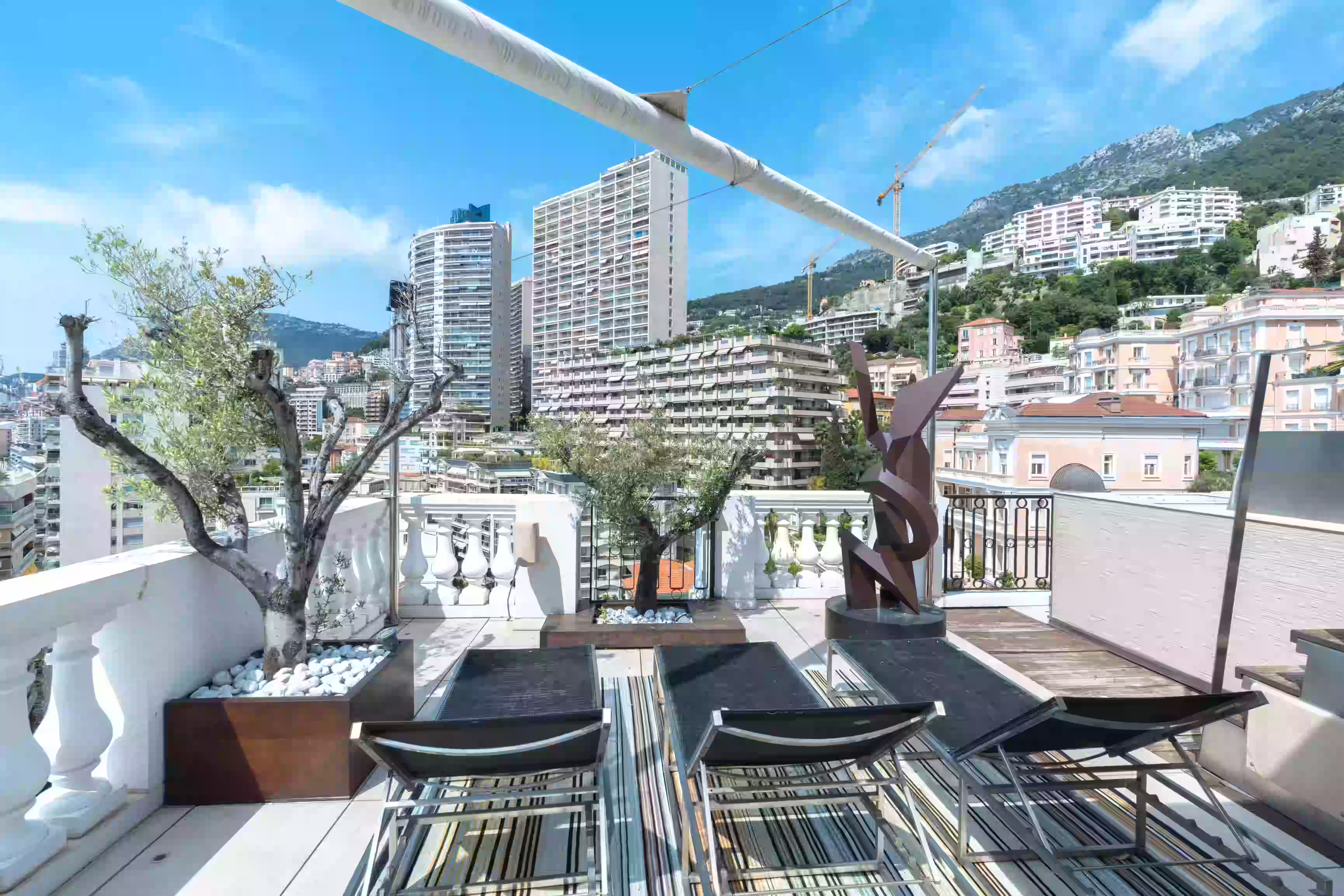
In Carré d'Or, exclusive villas, duplexes, and large apartments can command monthly rents exceeding €150,000, especially when offering panoramic sea views, private pools, or direct access to prestigious services.
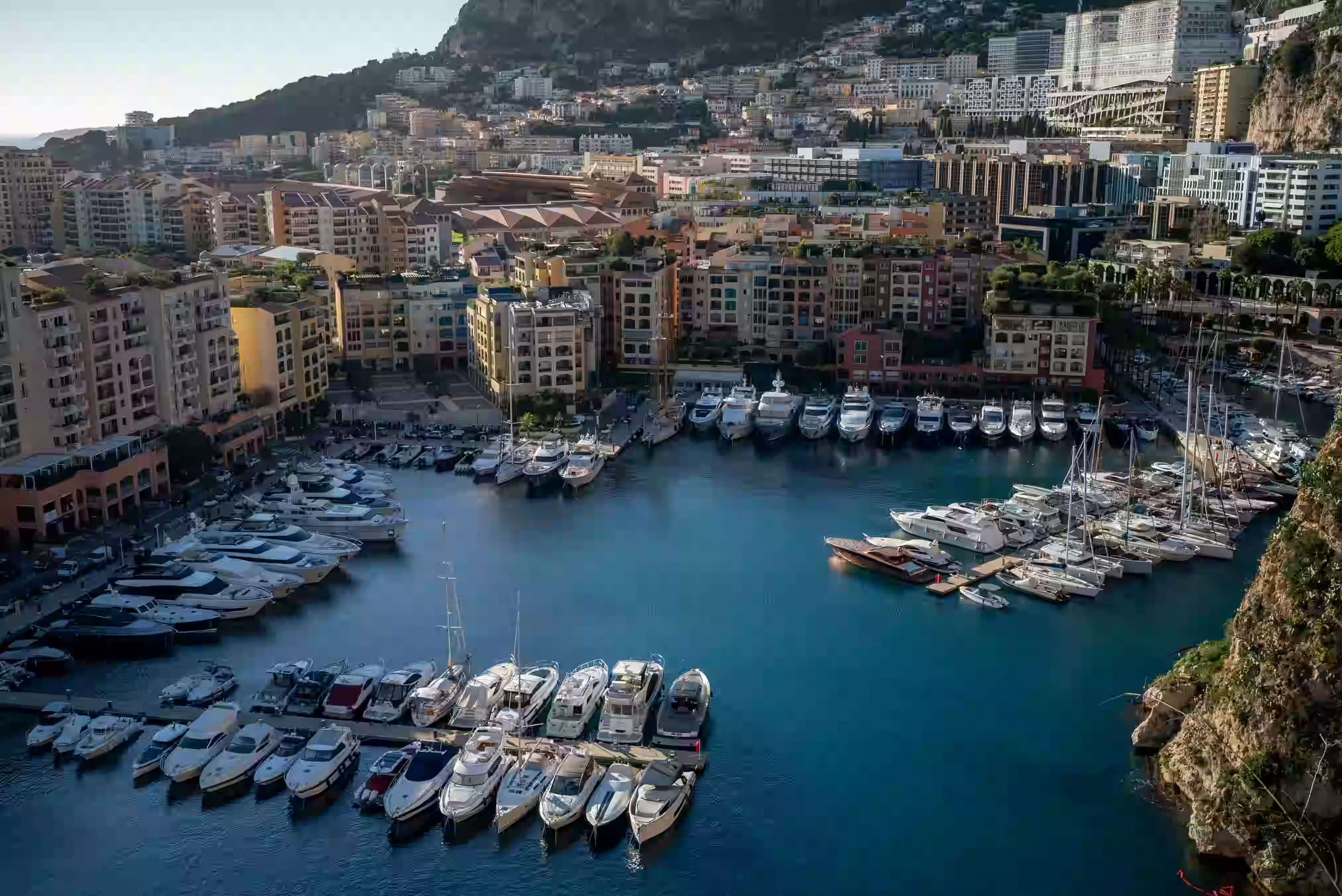
The Fontvieille district provides more variety, with high-end apartments and houses generally ranging between €30,000 and €60,000 per month. Properties here are prized for their modern design and proximity to the marina, with prices varying based on size and waterfront access.
Other areas, such as La Condamine or the Jardin Exotique, have very few large properties available, which drives demand and pushes rental prices upward. The scarcity of spacious homes combined with high exclusivity keeps the market extremely competitive.
Renters should also anticipate significant upfront costs, including multiple months’ rent as a deposit, agency fees, and strict lease terms when securing these prestigious properties in Monaco.
Gross rental yield : what landlords actually earn
Gross rental yields in Monaco run lower than most comparable global cities, typically between 2% and 3.5% annually, calculated as yearly rent divided by purchase price. This is a direct consequence of Monaco's exceptionally high purchase prices relative to achievable rents: a two-bedroom apartment bought for €10 million might rent for €40,000 to €50,000 per month, a yield closer to 5% at the top end, while a Carré d'Or trophy asset bought well above €20 million often yields closer to 2%.
The relationship between size and yield also runs counterintuitively in Monaco compared with most rental markets. Smaller units, studios and one-bedroom apartments, often deliver a higher percentage yield than large family apartments or villas, because rent scales less steeply than purchase price once a certain size threshold is crossed: a studio renting for €3,500 a month against a €1.5 million purchase price outperforms, in pure yield terms, a €45 million villa renting for €80,000 a month. This is one reason smaller units attract a distinct investor profile, drawn to income generation, while larger properties attract buyers prioritising personal use and capital preservation.
Investors drawn to Monaco typically prioritise capital preservation and appreciation over yield, unlike markets such as Berlin or Lisbon, where rental income drives the investment case. Financing costs matter here too: since Monaco banks apply conservative lending criteria and many purchases involve limited leverage, the yield an owner nets often comes closer to the gross figure than in markets where high loan-to-value financing erodes net returns through interest payments. A buyer weighing Monaco against a higher-yielding market should treat the two as fundamentally different investment logics, not the same strategy applied to different cities.
Understanding the Dynamics of Supply and Demand in Monaco’s Rental Market
Monaco’s rental market is characterized by a persistent imbalance between limited supply and strong demand. The principality’s small size and stringent building regulations restrict new property developments, especially luxury homes.
At the same time, the presence of wealthy professionals, business executives, and international residents ensures constant demand for high-end housing. This leads to high rental prices and quick turnover for available properties.
Tenants need to be financially prepared and responsive, as desirable rentals get taken swiftly. The tight market benefits landlords, while tenants gain access to exclusive, well-maintained properties in a prime location.
Current situation of the Monaco real estate market
Monaco’s real estate market remains one of the most exclusive and expensive worldwide. Demand stays high, fueled by wealthy international buyers and investors attracted by the principality’s political stability, tax advantages, and prestigious lifestyle.
Limited land availability and strict construction rules keep the supply scarce, maintaining upward pressure on prices. The market favors sellers, with properties often selling quickly and at or above asking price.
New developments focus on luxury apartments with high-end amenities, while resale properties continue to attract strong interest. Despite global economic uncertainties, Monaco’s market shows resilience and steady demand.
Evolution of the Monaco real estate market over the past 10 years
Over the last decade, Monaco’s property prices have generally increased, reflecting the principality’s growing appeal and limited space. Average prices for apartments have risen by about 30% to 40%, with some luxury segments seeing even greater appreciation.
The market shifted towards more modern, high-tech residences, with new constructions incorporating sustainable design and smart home features.
Investment demand has grown, especially from buyers in Europe, the Middle East, and Asia, seeking safe assets and lifestyle properties.
Economic cycles and external shocks caused some short-term slowdowns, but the overall trend remained positive, confirming Monaco’s status as a stable and sought-after real estate market.


.avif)